[00:00:00] Speaker A: Well, right now you rent a car and it's got newest technology. You can't run into the car in front of you. The auto brakes are going to kick on. So for us to have aircraft that will fly into each other today is just wrong. I mean, we have technology, we've done it in vehicles. You know, I'm sure, you know, they're working out the bugs, but you know, with the fly by wire systems, again, it's bringing additional safety and we have to get the new technology that my manufacturers are capable of producing.
We need to get it out there.
[00:00:28] Speaker B: Welcome to Hangar X Studios where former fighter pilot and host John Ramstead takes us on a journey across aerospace as it enters an historic period of innovation and transformation.
Our guests include aviation experts, pilots, financiers, military leaders and innovators of all types.
Buckle up for another episode of Hangar X.
Today's episode is brought to you by our platinum sponsor, XTI Aerospace. They are powering the vertical economy, building a long range VTOL. And you can find
[email protected] now please remember to like, comment and share on this channel and enjoy today's podcast.
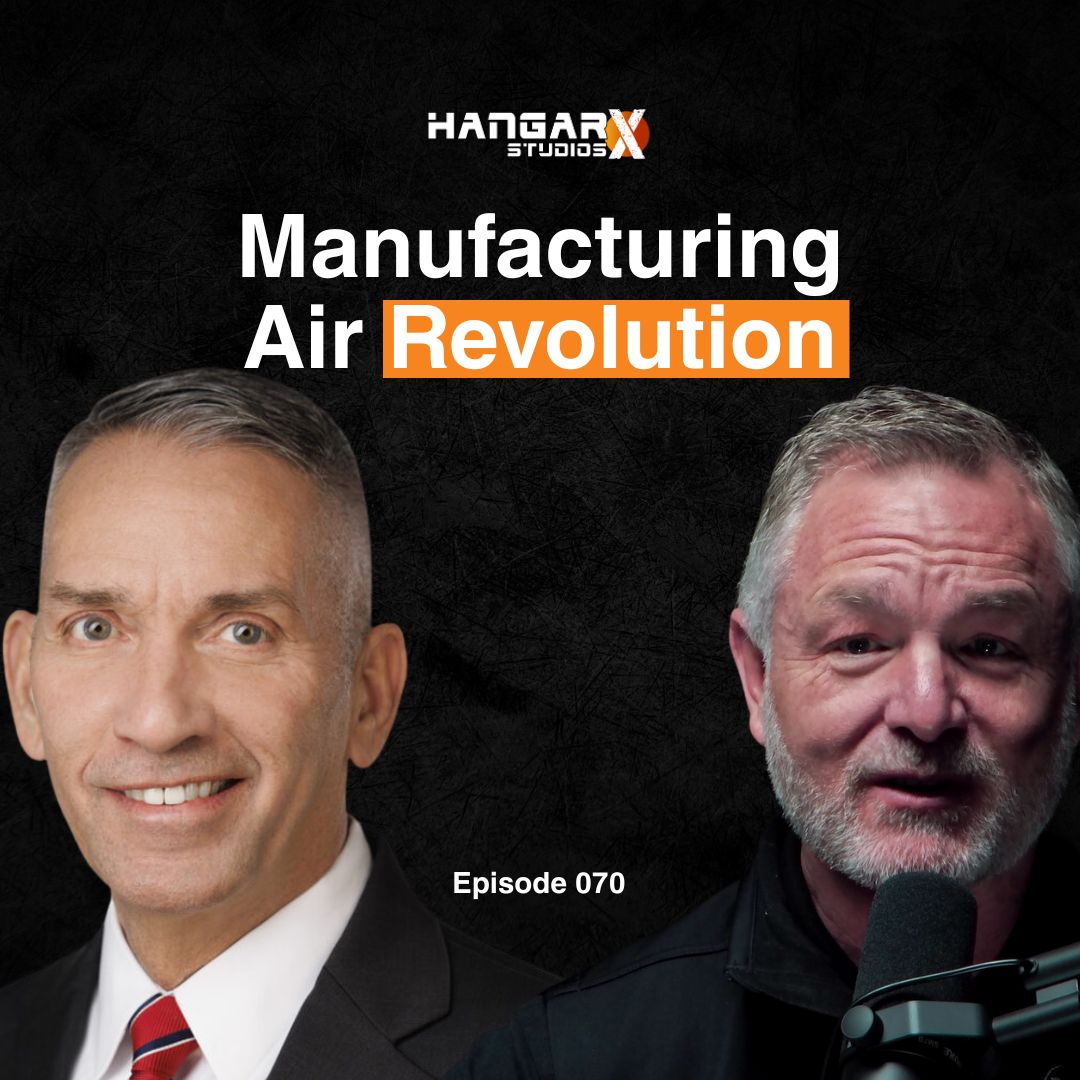
Hey, welcome to Hangar Rack Studios. And this is where innovators and aerospace experts and people that are following the future of this movement that's happening in aerospace and vertical mobility are coming right now to get the information they need to make the biggest decisions. And I'm excited to have Jim Viola on the podcast. Jim, first of all, welcome to the podcast.
[00:01:41] Speaker A: Well, thank you very much. I'm glad to be here with you. I heard a lot of good things about it and certainly watched some of your podcasts. So a privilege to be here.
[00:01:48] Speaker B: Yep. Great to have you here. And you are with gamma, the General Aviation Manufacturers Association. And I'm sure a lot of our audience has heard of Gamma, but they play such an important role out there. Let me. Everybody gets an intro, Jim, so I'm going to read your intro here.
So you are now the new leader and the voice of aircraft manufacturers, engine makers, avionics suppliers, MROs and training services worldwide. It's a big mission that GAMA has. You guys champion innovation across general aviation and the entire aviation ecosystem. You're promoting certification reform and we'll talk a little bit more. You came from the FAA and work very, very well with them, supporting the shift toward electric, automated and sustainable flight systems. And today in this conversation with Jim and I, we're going to be focusing on how advanced manufacturing tools and some of the emerging AI driven processes are just reshaping aviation as things are happening real time from the factory floor to regulation to the skies. And so, Jim, first of all, thank you for your service. 27 years as an army helicopter pilot.
You did some really cool things. And then you went to the FAA for 12 years and worked up to a very senior position in. And then you were at the Helicopter Association. Everybody here is very familiar with actually now VAI as they rebranded and verticon last year. And we're excited to be at Verticon next year. And then you just took the helm at Gamma. So let me just start with this. For people that aren't familiar with Gamma, Jim, from your words, I'd love for you to share the mission, the vision, and what you hope to accomplish over the next one to two years as an organization.
[00:03:35] Speaker A: Okay. No, thanks. I really appreciate the intro. Yeah. General Aviation Manufacturers association started during when general aviation was really on the downfall. A lot of the airplanes were no longer being produced, and they needed somebody to really represent general aviation a little bit separate from commercial or business, although business aviation is part of general aviation. And so our whole deal is getting items to market.
And it's going through, you know, the faa, their certification process. Although, you know, as well as other countries around the world, FAA or aviation has that extreme level of making sure that we're as safe as can be. And so with that is that certification process. And so, you know, from the early days of trying to bring safety with new technology and capability because, you know, you know, when we started aviation back in the Wright brother days, and just a total increase of what an aircraft can do, and then you added helicopters, and now today we're adding EV tools and electric hybrid.
So with that new technology, we want it. We want the additional capability it's there in general aviation to serve society. And I think it does a really good job.
I'm very excited and passionate about general aviation. And so the one thing as you do my introduction, I'm thinking, so what does. What everything is in common there is that I'd love to fly and I love to be part of the community that promotes flying. And that's what General Aviation Manufacturers association we're doing is trying to continue to build the environment both for certifying vehicles as well as the training side, as you mentioned there, as well as maintaining them with the MROs.
So the key thing is I have to set that strategic environment for 10 to 15 to 20 years down the road to make sure that this industry isn't going to go through what we went through in the late 70s and 80s, where there's a big downturn of aviation. Aviation brings so much. And if you wanted to talk to one group, you know, talk to the folks in Alaska, how much aviation brings to the community and the service that they need for that environment. So, yeah, that's what general aviation manufacturers does, is I owe it to my members to make sure that they have a business plan to bring something new to the market, that it's something that's measurable and that we can actually get the regulators to work with. And that's not just here in the faa, it's also with the assets also globally. Because most, as everybody knows, you know, aviation is a global asset.
[00:06:11] Speaker B: It sure is. And when you think of manufacturing, for you, it's more than just the aircraft. It's the engines, it's the components, it's the avionics, it's all the supporting subsystems. Anything in the aerospace ecosystem, it's not just building the aircraft. And I know there's a lot of changes with advanced manufacturing, digital design, AI processes. What are you doing with your members that are part of Gamma to help them either adopt that, embrace that, learn how to use some of the better the new practices that are coming out better.
[00:06:45] Speaker A: Sure. I mean, you talk about the new methods like composites and 3D printing that makes them, enables them to build the parts faster. And then not only just because we can do it as industry, that's where the education piece comes along of, you know, how do you bring the regulator with you? How do you regulate those new parts that, you know, before they had a really good way to run it through the wickets. Now we have to teach them why it's acceptable and why it's the equivalent level of safety, or a lot of times it's actually a higher level of safety. But we trying to get the regulator to understand how we're getting there with the new technology.
So those really can bring more aircraft to market faster. They can bring them to market more.
We're still limited. You know, as we're talking already, I start thinking, you know, what are the constraints we still have? Supply chain is really still a constraint for everything we're doing today. We still have issues there.
So people, while we can build the bigger parts, the supply chain is still kind of holding us back. And we kind of do a quarterly review and we're about ready to come up with our quarterly review of where the industry is on that.
But yeah, so the technologies that are out there and incorporating them and then seeing the newest members of Gamma who Have the newest ways of implementing the technologies that are out there and then making sure that they're also, you know, come into Gamma and see and they learn from each other. When we have our board meetings and we get 140 CEOs essentially together and they're talking about how do I raise the whole floor for the whole industry. And nobody's really just worried about their corner or their slice of the pie. So it's a great atmosphere inside of Gamma. Yeah.
[00:08:24] Speaker B: And you know, if you think of where things are now, call IT Industry 4.0 technologies. Right. From additive manufacturing to real time data to augmentation.
What are some of those that you're seeing that are coming into manufacturing processes that either make things more innovative, maybe safer, maybe deal with some of those supply chain issues?
[00:08:47] Speaker A: Well, you hit the first one was real time data.
You know, as they're building these aams, you know, they're measuring everything. I mean the electric motors, they can put in vibration analysis and that stuff is providing so much more feedback than we had, you know, 20, 30, 50 years ago when you built an airplane.
[00:09:07] Speaker B: And they're also adding in failure analysis, hum systems, you know, things that are also, and you know, AI is running back there going, hey, I'm hearing something that, I think this part might fail. This shaft, this pump might fail in the next 60 days. High probability. So go look at it. You're like, it was right, right.
[00:09:25] Speaker A: And, but they're actually using that as they're developing even before they get to the certification phase. And so when they, when a regulator asks for some data, they can almost overwhelm them with the data if they're not there. Understanding the collection of so much data out there and how they've tweaked it to get to the point where they think it's, you know, already equivalent level of safety, but most times even so much more higher than the current ability. So data collecting is certainly a big nai, as you mentioned there.
So the newer manufacturers and then, you.
[00:09:59] Speaker B: Know, and how does that draw the line between that process and then the actual manufacturing of whether it's a component or, you know, an aircraft wing?
[00:10:09] Speaker A: Yeah, well, yeah, I've been to some of the members and I've seen walk the Floor and saw where those, depending on the product that was being produced, they, I would say every manufacturer does it a little bit differently of how they run their teams.
It's pretty amazing from, you know, a manufacturer that's been around 20 years actually, I'm, I'm getting ready to go out in a couple weeks to see Textron. Okay. And I look forward to seeing, you know, how they do things.
[00:10:40] Speaker B: They have a lot.
[00:10:41] Speaker A: I go to Wichita. Okay, so Wichita. Yeah. So we'll see what Ron Draper shows me out there.
[00:10:49] Speaker B: And I'm sure you know Charlie Johnson.
[00:10:51] Speaker A: Yes.
[00:10:52] Speaker B: So Charlie's a good friend of mine. He's become a mentor. If anybody doesn't know, he used to be the former CEO of Cessna during that Sail 2 Textron at the time, and just a phenomenal human being.
[00:11:04] Speaker A: Yeah. So I'd like to, you know, have them show me that line that they're using today.
Been up to beta, you know, Beta Technologies, seen some of the work they do and how they run their teams up there.
I do have to get out to the west coast, hopefully in the next couple months, see some of the new manufacturers out there.
But, yeah, it's a constant loop where you're monitoring the loop or human on the loop, some of the new terms. Now, is a human in the loop or is a human on the loop on some of these things?
[00:11:37] Speaker B: So some of the data, additive manufacturing, augmented reality, some of these are as companies are bringing this into their manufacturing process, and some of these are newer techniques. How does that affect certification, Jim? How does the FAA look at that?
[00:11:54] Speaker A: Well, let me try to figure out how to describe it. You know, the train moves slow. Right. And so if you're very happy with the nice chugging along and you got the bright ideas to come in, you have to really be patient and make sure that number one thing I tried to do and I try to actually mentor both in the FAA as well as out here in industry, is to sit down at a table.
And so many times they talk past each other on both sides because you know exactly in your mind what you're trying to say. The regulator knows in his mind what he wants to see. And so many times I've seen, you know, they're trying to talk to 20, and somebody will say, well, I've got 5 to 15. And the other person says, well, I've got 1 to 5 and 15 to 20. And it's like, hey, guys, can we talk about this? And get them both to overlap. And then I really like to see a contract signed. Okay, here's what we're going to do in the next 90 days. Here's what we're going to do in the next 120 days. And that's. I've already talked to, you know, the staff here at Gamma, being the new guy. And, you know, how do we Measure this stuff. How do we make sure that we're keeping things moving along? What's my role as you know, at the, at this level with the administrator, with the faa, with other regulators in easa to just check in to make sure both our teams are executing what we'd like to see and not necessarily they have to have that agreement. And we'll say even when I was out at the FISDO and you're working on a 135 certificate or 142 certificate or a 141 certificate, sit down, come up with a contract, what are you going to do? What am I going to do? And let's check in and check in often.
So I think a lot of that's important. I know where they've developed some dashboards that gamma over the years and the committees here really work well and the committees are all based on things that need to white papers that need to be produced for part of that education process that are working.
And so a lot of it's just how do I integrate now at the right level to keep enough pressure to keep things moving? Because that's the overall mission of gambling.
[00:14:00] Speaker B: It is. And question for you. We hear the term advanced manufacturing quite a bit as we're relating. How would you define what advanced manufacturing is and why is it important?
[00:14:11] Speaker A: Well, there's enough variations out there that I don't want to come up with the Jim Viola definition. But the ability, as I talked about earlier with the different ways to produce some of the, with the 3D printing, the lighter, stronger parts, you know, if you're replacing a current part with something that's somewhat, that's stronger and then trying to get the regulator to give you the time or you know, give you the extra hours or the inspections or. You mentioned hums. You know, I'd really like to get to condition based maintenance. You know, we've been talking about that for, I don't know, I've probably been involved in for 20 years and I don't know exactly, you know, who's benefiting from it today. But to, you know, to be have to take apart aircraft to do an inspection when a lot of times you're doing more damage to that, you know, or at least risk of damage for taking it apart. With all the technology we have now using, you know, just maintaining them with the ability to do inspections now with drones, you know, that can now enable them to do everything quicker, more predictable, with a predictable outcome.
[00:15:26] Speaker B: Well, yeah. So the condition based maintenance. As an aircraft owner, does this mean someday I Might not have to do my full overhaul or my hundred hour might take less than two weeks. Jim?
[00:15:37] Speaker A: Well, I would love to say yeah, I mean I was on. I'm not sure, you know, I've been on stage so many times at Airventure, I'm not sure what hat I was wearing last time, but we had. I mean you talk about workforce shortages, right? And you talk about amp shortages and you've got a perfectly good aircraft. Well, I flew Chinooks so I know every time a snook was getting ready to go in for the 300 hour maintenance, it was flying like a dream. But now we're going to take it all apart, we're going to put it back together. It's going to take me 25 hours to get it flying smooth again. So yeah, I'd like to get to the part where we have enough ways to dupe, you know, predictive maintenance and that we're not just replacing parts because it has a magic hour.
[00:16:18] Speaker B: Well, I gotta tell you, the Chinook, I've flown on Chinooks in the back, the way that thing shutters and vibrates, that, that must be one of the most resilient aircraft ever built with those two rotor systems.
[00:16:31] Speaker A: Anyway, it has five, it has five transmissions.
[00:16:35] Speaker B: Five. Oh, that's it. Five. Okay, that's. It's an impressive airplane question for you too because Gamma has really, I think embraced and is a proponent for what's happening in advanced air mobility.
You know, from let's say larger unmanned drones, EVTOLs. I think there's a whole nother emerging space in regional air mobility extended range VTOLs that are being looked at from, you know, Sikorsky and Leonardo and XTI and in Horizon there's some players in that space. But looking at new propulsion systems too from hydrogen, hybrid, electric, we had vertigo on and some other companies ascendance over in France.
But there's a lot of really radical, I think design not radical, but you can see radical. Yeah, radical new design, you know, it's allowing radical new thought in how to design an aircraft that's also saved certifiable. And I'd love to know your thoughts as Gamma and your members as this is now coming in. And I think some of these almost novel technologies are going to find their way all the way up into business jets at some point.
You never know.
[00:17:48] Speaker A: Yeah, no, I mean you see, you see some of the stuff, you know, you read about, you have to have. You know, what is really good in aviation is you see the leaders and the thinkers out There and they're thinking 15, 20 years.
And you look at some of the stuff that's come along with the. We just put together what's called epic, which you know, is talking about the Electronic Propulsion and Innovation Committee.
[00:18:10] Speaker B: Okay.
[00:18:11] Speaker A: And that's one of the things I saw works really well here in Gamma is the committees. And then that committee will actually have a co chair that is one of the CEOs of one of the companies.
And so the involvement at the committee, they're not on a committee just to say they're on a committee. They're on a committee to, to solve issues. They're on a committee to provide white papers to the FAA and other regulators. And the work that they do of how we're going to get to 10 years from now, 15 years from now starts today with saying, hey, we want to make this happen. And that's something that here in the United States now we're really gearing up that we want to be leaders in that industry. And a lot of folks are putting effort into that. The electric engines, the hydrogen engines, the hybrid powered aircraft.
You know, I was over at Arrow over in Europe earlier last year, I think I spent about three weeks over there as part of taking over Gamma because we have a Brussels team over there as well that works really well with the ASSA and you know, seeing all the new innovation stuff and seeing engines now where essentially motors and of course I'm a pilot so I've tried to keep up with these engineers and I love just put three engineers together in a bar and just have a drink, watching them, you know, debate stuff. But, and then I just want the product that flies well so we can go out and have a good time in it. But, but with that is now they're talking about and I, and I mentioned at one of the meetings about, you know, auto rotations in a helicopter are going to be a thing of the past because we're going to have hybrid engines and you're going to have another one. You know, you're going to have two different sections to that engine and one engine quits, the other one's going to get you a safe landing. We're kicking around the stuff with this powered lift certification for the future. And again, you get into these hybrid engines and you have the capability to do flyaway. There is no auto rotation. I mean there's no auto rotation.
You know, in the Chinook, of course you've got one engine could power me all the way up to £40,000. So I got two engines I can still go down to about £40,000 on one engine. And I can make a safe landing or continue to flight if I needed to. But these future hybrids, and we did get the head nod that they were moving that way where you can have both two separate propulsions inside the engine and that they would call it more than one engine. So essentially where there's a lot of.
[00:20:31] Speaker B: Restrictions, almost like a hybrid car works.
[00:20:34] Speaker A: Yeah.
[00:20:34] Speaker B: It's simultaneously either pulling from the motor, the gas motor, or from the electric motor, from the battery.
[00:20:42] Speaker A: Right. But if the regulator lets you say that that's two motors, then now you are no longer restricted to single engine. Cape single engine restrictions that, you know, don't make a lot of sense anyway because the single engine turbine engine, you don't have that much issue with it to begin with.
[00:20:57] Speaker B: You know, that could be huge in Europe because helicopters need to be dual engine in Europe.
So if I had a hybrid power plant on a smaller, you know, frame or say like a Bell 505 or a Robinson, I could actually use it in that environment.
[00:21:14] Speaker A: Right. And I saw some of those engines over there last year. Wow.
Yeah, they're coming.
[00:21:19] Speaker B: Some cool things are happening, aren't they?
[00:21:21] Speaker A: Absolutely. I mean, and it's safety. And so that's why on a negative point, I will say that right now, you know, regulators are keeping safety out of the cockpit. They're keeping safety out of implementation. And that's where we, you know, where the, the work I've seen when I travel around, I look at these manufacturers, they are being as safe as caution as possible, you know, and they, no one out there wants to put a unsafe product out there. And so just having the proper level of touch of the regulator is what we. That's one of the things Gamma works on really hard to make sure. Okay, if 10 of these things, you know, we need to get certified and nine of them you've seen before, just, just focus on the one and let me do the other nine with a dard, a representative so that we don't have you looking at all 10 items.
[00:22:08] Speaker B: What's a Dard?
[00:22:09] Speaker A: Jim Dard, designated Wordness Inspector. Essentially, so that rather than the FAA doing it, having to look at it themselves, there's, you know, just like you have designated pilot examiners, they have the same thing for the manufacturer's world.
[00:22:22] Speaker B: Oh, okay, that's great. I didn't know that AI is a big topic of conversation.
How does AI come into some of these processes? Learning accelerating things? Maybe even what you just spoke to is the regulator is not Preventing things that could make things safer.
What are your thoughts on just what AI might do for the industry?
[00:22:48] Speaker A: Well, I mean, the hardest thing is where.
Well, so there's automation. You know, we're trying to come up. We're actually, we're wrestling around right now with regulators. The definition of what is, what is automation? Right. And I'll use AI because AI certainly will have a lot of ability to take over and actually be automated and. Or is it autonomous? You know the definition of what does autonomous mean? When is the pilot in control? When is AI in control?
I mean, we're trying to draw lines, I guess, and a lot of that comes down to authority. You know, what will AI be able to take? What actions can he take or it take what actions will the pilot. Will you limit that stuff? So it's interesting high level conversations as to how do you divide up essentially that workload and then who becomes responsible for what and at what, you know, are you limiting the pilot's capability to take action? Right. I don't know, you know, how automated your.
What was the most sophisticated aircraft you flew?
[00:24:02] Speaker B: Honestly, the most sophisticated is the Cirrus SR22, the G6 and G7. I've flown, you know, F14. The F14 I flew had an autopilot that was always broken. So I don't think I ever used it in my entire career in the Navy. When I flew for United, I flew. An airline without an airplane is an old one, jet stream 32 with no autopilot. So yeah, the Cirrus is the most modern aircraft I have flown. I've never flown like an current modern airliner. But you know, I've actually also flown the phenom with the G3000.
That's a beautiful platform designed to take the workload for that single pilot. If you want to get single pilot certified, keep it safe. So, but, but you can even, you can even do more, I believe.
[00:24:50] Speaker A: Yeah, well, when you look at. So again over at.
In Europe, we were looking at the Cirrus jet and then we also were looking at the King Air.
And so the King Air is considered to be simple and the Cirrus is considered to be complex. And we're trying to get that straightened out a little because as you just mentioned, and certainly everybody when you show them the seriousness capabilities, it's not a complicated aircraft, but because it's a jet aircraft, it gets called complex versus the piston. You know, the, the engines in the, in the King Air. So interesting.
[00:25:24] Speaker B: Those are the things that both platforms have a turbine engine.
[00:25:28] Speaker A: Right? But as props. Right, Right. So, yeah, so just some of those things that don't really pass the common sense check or the safety check. You really got to start with the safety item. And then we're really. This was a spin off from the AI or how easy it is to fly.
You know, I've got some members that are developing aircraft that, you know, the pilot essentially is there.
Right. And he's. And he's flying it now with an iPad. If you're flying it with an iPad, all the actions that are being taken before physically. Right. Are being done by fly by wire and all that. So it's.
Regulators are having a hard time wrapping their head around who's in charge. And, you know, I'll leave it at that.
[00:26:16] Speaker B: I did fly the F16, which is full fly by wire. And I gotta tell you, that was magic compared to the F14. But I loved how involved you had to be as a pilot in that F14. It's probably familiar with Chinook like you. Well, any helicopter. I'm learning how to fly a helicopter. You are, you are the only thing giving that aircraft stability in most regime, especially in below 30 knots.
[00:26:40] Speaker A: Yeah, yeah. No, they. Well, yeah, you could, you know, they have really good autopilots coming out, but it's what, it's really good.
My, I guess, constraint. Personally, if I were to buy an aircraft, I want to be able to turn that autopilot off at some point.
It was funny when I was really in the FAA days and I was talking about how great all this automation was coming forward. I was talking to some people that drive cars and there's one particular individual I was so excited about. Autopilot and shoot, full approach and it comes down on the glide slope and you can actually come in. My Chinook, I come to a hover at 50ft and then I just got a little button. I push for three feet at a time. It goes down three feet. You just hold it. So if you were 00, you could still do that. And a lot of the new helicopters are just a spin off to. But we can't use that with the FAA and other regulators right now. We don't have 00 approaches. We, we have to get there for the AMS because the weather can't be the reason you're going or not going so well.
[00:27:35] Speaker B: All the AAMs right now are VFR only.
That's my understanding. Is that correct?
[00:27:41] Speaker A: Well, they're trying to go for the simplest way to get certification and start making some money back for the, you know, the Investors.
So, yeah, you'd, you'd hold off probably, you know, maybe as long as another two years, which shouldn't be the case because you, you know, right now the NTSB has several recommendations that says that all 135 operations ought to file IFR flight plans and fly IFR, which doesn't have to be IMC, but it's a safer way to do it. So it's kind of interesting that we do have folks coming into the aviation world not doing that, but I understand the constraints and like I said, as we're trying to do is get to operations where they are commercially viable and producing money to keep these things from going out of business. I mean, you've seen some AM companies already that haven't, haven't made the cut. And it's because of the.
[00:28:31] Speaker B: Well, they've raised billions and didn't make the cut. There's been some big stories. There's also been, I think, you know, some big winners. I'm not going to try to pick a horse, but, you know, a company that's really impressed me right now is Joby.
I think they're doing a lot of things very, very well. And we've, you know what, we've taken a page out of the book. I've gotten to know Dave Smith at Robinson and how they've integrated all their manufacturing, quality control and design into one campus, I think is just. Is the part of their success.
[00:29:00] Speaker A: Yes. Yeah, that's certainly, you know, as I'm answering some of the questions here, I'm making sure I've tried to keep my P's and Q's in line because otherwise David will call me and tell me it was good to get Robinson to join Gamma.
And helicopters, you know, are proof of concept. I mean, you know, that's my background. These AAMs that are replacing about 5% of what helicopters do, you know, helicopters have 44 missions, these AAMs and regional airlines and to be able to service, you know, the communities that don't aren't getting the service today from the airlines is what I hope to see these AAM vehicles do because of the sustainability, because of the less of a, of a big footprint out there.
And that's where again, as industry, not just me, but also aopa, Vai nata, we're all watching to make sure that. Some of the early things I saw was that from an ATO perspective that folks wanted to make sure that these AAMs and these EVTOLs couldn't do what helicopters were doing, which is they were landing Anywhere. No, we got to make sure that they can't do that. Well, it's a capability.
And I used to say a couple years ago, as we're trying to figure out the infrastructure to make all these EVTOLs successful is, you know, how about that soccer field that's, you know, in that rural community that's not used on Sunday morning? Maybe that's when they run a couple flights out of there to the airport. You don't need the full infrastructure for some of this, you know, for these EVTOLs and helicopters to help a rural community.
So I'd like to see a little more creativity versus restrictions that we've been fighting for years to make sure that the regulator doesn't regulate that you can't land someplace and then work.
[00:30:47] Speaker B: Well, I think the VTOL opens up so much more possibility. I was just actually, if you look at the 5,300 public use airports we have, approximately there's about 2,000 where you could land, you know, from a light jet.
So unless I'm flying a helicopter or a small airplane, but if I have a bigger logistical need or transport need, all of a sudden this vertical not only opens up those airports, but it also opens up hundreds of thousands of other public and private possible landing spots. So that also gets me to air traffic control and ATC modernization. Jim, I know it's not a big passion point for you.
It is huge for you. I know it's one of your causes. And it's about infrastructure and Gamma and the manufacturers that are going to actually be in that space because they're in the aerospace ecosystem.
I mean, it's already stretched right now there's modernization that is happening. But now we're looking at what adding IFR flight plans to hundreds, if not thousands of operators, like what Blade is doing in New York, but let's add that now into a whole bunch of other cities and adding thousands of new aircraft to the system from low level, you know, EV tolls to other ones that are not taking off from traditional airports.
Talk about that. Because I know it's. It's something that Gamma is very focused on and yourself personally.
[00:32:17] Speaker A: Yeah, no, I mean, you know, the days in the FAA again, always pushing. I was kind of the helicopter person inside the FAA trying to say, what about helicopters and what about helicopters? What about helicopters? Well, now we're back to what about helicopters and what about evito? What about am?
Because, you know, the airspace is, is such a great asset and they. But you have to have that ability to land somewhere.
Helicopters and EVTOLs and of the future. And AMs want to get to where you don't need that big JF that, John. You know, big airports. You want to be able to just get to that rural community and be able to service them. You want to be able to take off. I mean, it's not. It's nothing new. You want to be able to take off from point A, fly to point B, be on time, be procedural based. I mean, we've got batteries now that we don't want to do holding. I mean, we're fighting having helicopters take off, VFR hold in marginal VFR over the Statue of Liberty to get an IFR clearance to fly somewhere. Everybody needs to be. I mean, right now, what we're pushing for this week, we've been trying to make contact is to get digital flight plans approved via your iPhone. I mean, that's a capability that we ought to have today. You ought to be able to get that IFR clearance, get into the system, be safer. Know that you've got a schedule to do that. And I think we've got the technology that allow that, and we need it to get these vehicles of the future there. We need to be procedurally based versus, you know, a lot of the separation that's going on. We need to use all the technology to include AI to be able to get the majority of the traffic moving and then have ATC there as the. All right, we got some yellow targets here. We need to do some personal touch here on that.
Of course, we had the, you know, the terrible accident at DCA with the helicopter.
You know, there's a.
We need to take the time right now to really do the push for the Modern Skies initiative. We've got 50 associations that have all come together.
We've already got some money from Congress. We really, you know, the administration is really pushing for $50 billion to just say we need it, we need to get this thing started and we need to do it now. The technology to learn that ATC folks are. Are. You know, they're being worked really hard and they can't really move around the system. If they want it to move, they'd have to learn a whole new system because the regions aren't all the same. When we went up, when we went to dot, and we actually wait just.
[00:34:47] Speaker B: To back up, but all the regions don't operate similarly well.
[00:34:51] Speaker A: They don't have the same equipment.
[00:34:54] Speaker B: Oh, wow.
[00:34:55] Speaker A: Yeah, I know. That's a.
[00:34:56] Speaker B: So my training has to be different, my procedures have to be different, my checklists are different. Because I'm on this system in New York City versus this system out of Oklahoma City.
[00:35:06] Speaker A: Yes, that's what I've been told. And when we, we had all that old equipment that was set up on the stage at dot when Duffy did his initial push, I mean, some of my friends were like, wow. So you guys were just displaying like the history of atc. I'm like, no. His guidance was, I want something that's in some place today. And so it was all actually actual equipment. It was unbelievable how old our technology is that we're forcing these folks to use. I mean, I remember flying as a pilot when I was in the FA and I had, you know, I already had TCAs. No, I'm trying to think of it. Tis B, I think it was. But I had more situational awareness in my Grumman Tiger than tower did. And I was helping him out with where the traffic was because they don't have inside. So just being able to use my.
[00:35:51] Speaker B: Flight aware with my sentry receiver on my window and ADS B in and out. Now I have more SA than I ever had with flight following from the ATC.
[00:36:05] Speaker A: And in 1997-98 we were flying a flight of four Chinooks. We were doing 0.2 Tacan off each other in IMC. So I mean technology now, 20 some years later, we've got to have a better way of moving through the system. We've got to be able to, you know, do multiple approaches. We got to pick up the ability to land more aircraft. That's one of the constraints. The airlines certainly want it. I think technology will allow us to do that as well. We just need to break the mold that we're stuck in that's been here since 70s and 80s.
[00:36:37] Speaker B: You know, I have the answer for you. You call George Lucas because clearly in Star wars they figured out how to have all the flying things not run into each other. And now we just got to implement that whatever system they had.
[00:36:49] Speaker A: Exactly. Well, that's what I say right now.
[00:36:51] Speaker B: But that is the future though. That is something that is kind of a blueprint of what needs to happen though.
[00:36:57] Speaker A: Well, right now you rent a car and it's got newest technology. You can't run into the car in front of you. The auto brakes are going to kick on. So for us to have aircraft that will fly into each other today is just wrong. I mean, we have technology, we've done it in vehicles. You know, I'm sure, you know, they're working out the bugs. But you know, with the Fly by wire systems. Again, it's bringing additional safety. And we have to get the new technology that, that my manufacturers are capable of producing. We need to get it out there.
[00:37:23] Speaker B: Well, think about that. You know, I have my ADS B, I have my traffic alerts. And almost, except for a few exceptions, most airplanes have some kind of autopilot system.
They could put in some kind of steering and haptic feedback to the pilot, like I'm turning, you left, I'm turning. But it could give you intelligence on which way to go.
[00:37:43] Speaker A: They've demonstrated all that they can do it.
We just need to get it certified and on board. And then, you know, that's when you get into the cost of, you know, upgrading. So the sooner you can come up with the future vision.
And on that future vision, one of the things that, you know, I've been, I don't know where it is today, but when you talk about the only way these AAMs and EVTOLs are going to work is you got to get back to Center City again. You got to get back to rooftops. And years ago, probably about three years ago, I guess I was at V, at vai, I was having a conversation with a high level DOT and they were like, well, you know, the buildings currently can't handle them. I know. And I said, I know they can't currently handle them. We need you to say in 20 years we want to be back in the middle on rooftops and then, you know, the engineers of those buildings will start designing the buildings like they did in LA. I mean, LA has got over 100 heliports I think in that area. And in the 80s they stopped helicopters from using other than emergency.
So I mean some of those things. And that's where some of these AMs will have the business plan. Essentially they're actually executing helicopter plans from the 80s.
[00:38:51] Speaker B: Fascinating perspective. I'm going to have to look, we need to talk more about that, but let's do this as we kind of land the plane a little bit. If you're looking out, let's say three, five years, what are some of the emerging technologies that are about to come out, coming out right now that you think are going to have some of the biggest impacts on the industry if they're adopted?
[00:39:12] Speaker A: The engines. Absolutely. Power plants, okay. Power plants are key items. Of course we're, you know, on the, on the unleaded solution. You know, we're still pushing, pushing that. We've got a mandate to try to have that solved by 2030 and then 2031 in Alaska. Alaska. We need. We need to solve that for the current engines. There's no way that we can not solve that issue. And so a lot of pressure there on. On the Eagle with the FAA and others.
But getting to, you know, the electric is growing. The electric aircraft are out there now. I've flown two electric airplanes finally.
[00:39:49] Speaker B: Which ones?
[00:39:51] Speaker A: So I've flown Pipistrel and I've also flown Alia with.
Yep. So, yeah, very cool.
[00:39:58] Speaker B: What do you think?
[00:40:03] Speaker A: I mean, number one. Well, Aaliyah was all fly by wire. I mean, that was just marvelous. Like you said, having the touch and just kind of thinking it and putting your hand as to what you want it to do. And it's doing it was good.
And then just the ability to do, you know, to be quieter. I mean, it was funny. I got the full demo in Europe because we taxied out and when we taxied out, we were told, taxi out and hold. And of course, I think over there, when you pull the throttle back, essentially the prop stops turning. So we sat there for a minute and then we called tower and tower said, well, do you have a problem? Because the prop wasn't turning. And we said, no, we're just waiting to go because it just spins up in a heartbeat. So I know that Beta was saying that right now they just have it. So the prop spins ever so slow.
So it's not using a lot of electricity, but it's trying to at least show.
Doesn't freak out that human, you know, that's not used to the new stuff, but. And it's quiet. So that stuff's coming. But I really like the hybrid where you're putting two propeller, two systems together. And like I said, you know, the one I saw with the helicopter was that, you know, just a normal engine, then you put five or ten minutes of electric power on their battery power. You don't need a lot. You just need enough to do that landing just to get rid of the auto rotation and then still classify it as multi engine or multi propulsion so that we can get rid of those. Just administrative. No single engine operations here because, you know, the data shows again, you're not having the single engine issue, but it's.
[00:41:43] Speaker B: And I might have more aircraft certified for, you know, like this, the VTOL and helicopter for IFR too, with that.
[00:41:49] Speaker A: Correct.
[00:41:50] Speaker B: And it's safer.
[00:41:51] Speaker A: Yeah. I mean, that engine doesn't know if it's ifr, imc, vfr.
[00:41:56] Speaker B: No.
Love that. Well, Jim, we'd love to have you back on. And as things come up, you have Any advances you're talking about, whether it's modern skies or any other initiatives, you have a platform here.
We have an audience. They're building airplanes, they're flying airplanes, they're changing aerospace. And.
And what Gamma's doing is so important to this whole mission. So love to have you on regularly.
[00:42:24] Speaker A: All right. No, I love it. I mean, I'm fired up about general aviation. I still fly a helicopter. I still fly airplanes.
I just did some training with Paddy Wagstaff last weekend. I got up and got inverted, did some Rolls, so it's exciting.
[00:42:40] Speaker B: That sounds fun. I would love to go for a flight with Paggy Way. Actually, one of the things I want to do is on my bucket list is to go down to Stallion 51 and Kiss Me and go fly the P51. That is still on my bucket list.
[00:42:51] Speaker A: I did it.
[00:42:52] Speaker B: Oh, you did? I was just down there and met with Doc Bush down there.
He's my ame, but what a phenomenal group. But I'm. Next time I go back down there, we're going to make that happen.
[00:43:02] Speaker A: Yeah. I never knew that manifold pressure went that high as we were just pointing it straight up. What was it, like, 50, I think. I mean, it's over 40.
[00:43:13] Speaker B: That thing's bulletproof.
[00:43:15] Speaker A: Wow.
[00:43:17] Speaker B: All right, well, Jim, great talking with you. Thank you so much. And we will definitely be in touch soon.
[00:43:23] Speaker A: All right, good talking to you. Have a good one.